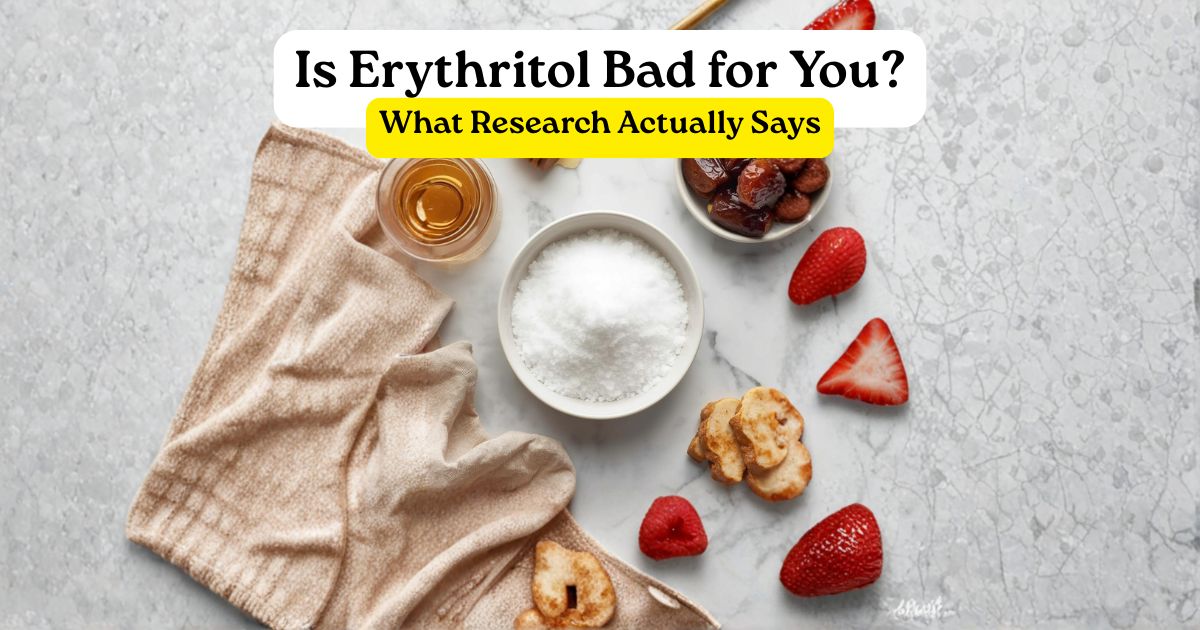
A clear, grounded look at erythritol safety, side effects, heart health concerns, and what to use instead if you are trying to live cleaner
There is a moment that happens for a lot of people when they start paying closer attention to what they are eating.
You flip over a label on something that looks “clean.” Maybe it is a protein bar, a dairy-free dessert, or a low-sugar snack. And then you notice an ingredient that keeps showing up again and again.
Erythritol.
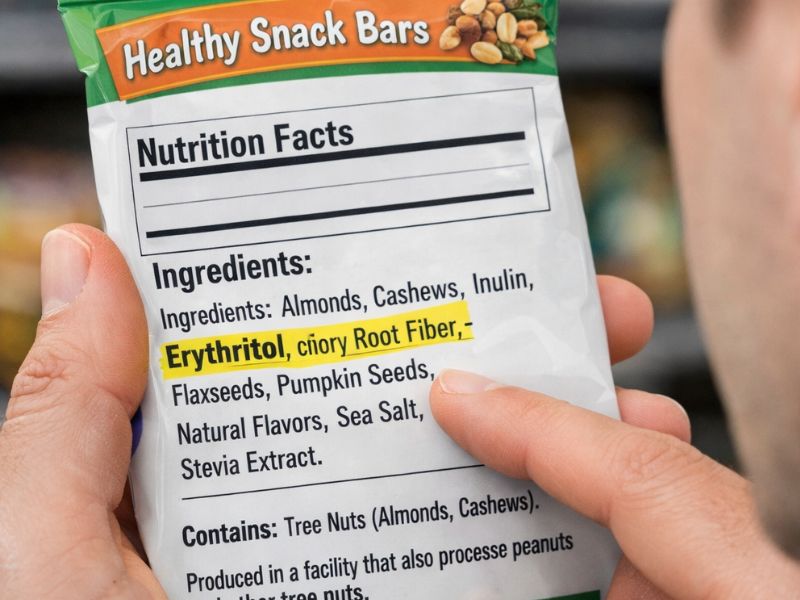
At first, it feels like a better option. Zero sugar. Low calorie. Keto-friendly. Widely used in products that position themselves as healthier alternatives.
But then come the questions.
Is erythritol safe in 2026?
Are there real erythritol side effects?
What about the conversation around erythritol blood clots and heart risk?
And if you are trying to live cleaner, should this be something you are actively avoiding?
This is where things can start to feel confusing.
So instead of reacting to headlines or cutting something out overnight, let’s slow this down and walk through what we actually know.
What Is Erythritol and Why Is It Everywhere?
Erythritol is a type of sugar alcohol. Despite the name, it does not contain alcohol in the way we usually think about it. It is a low-calorie sweetener that occurs naturally in small amounts in certain fruits, but the version used in food is typically produced through fermentation.
In the United States, erythritol is most often made from glucose derived from corn. That glucose is fermented using yeast, then filtered and crystallized into the white powder you see listed on ingredient labels.
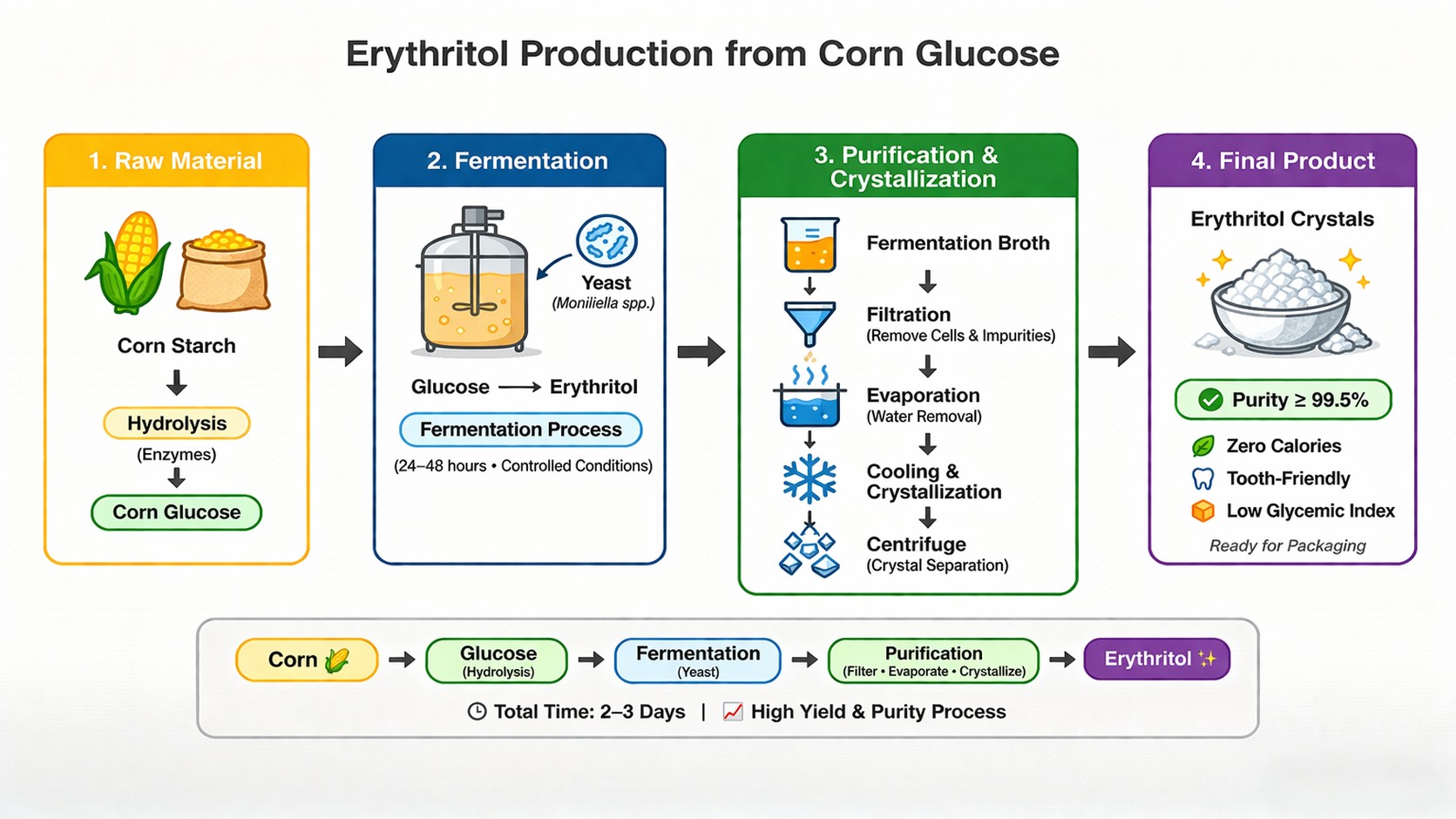
Over the past few years, it has become a go-to ingredient in:
- Keto and low-carb products
- Sugar-free desserts and snacks
- Protein bars and powders
- “Diabetic-friendly” packaged foods
- Natural sweetener blends with monk fruit or stevia
Why?
Because it checks a lot of boxes for both brands and consumers.
- It has little to no impact on blood sugar
- It provides sweetness without calories
- It does not spike insulin the way regular sugar does
- It helps products taste closer to traditional sugar
The reason erythritol doesn’t provide calories or sugar to its consumer is actually quite simple. The body can’t fully break it down. That’s right. Even though erythritol moves through your system, it isn’t really metabolized in the way sugar is. Research shows that it’s rapidly absorbed in the small intestine but poorly metabolized, which is why it contributes little to no energy.
But that also means it doesn’t offer the same kind of nutritional value or support as other natural sweeteners like monk fruit or raw honey. It passes through more than it participates.
From a formulation standpoint, it is incredibly useful. From a consumer standpoint, it feels like a solution.
But this is where nuance matters.
Erythritol is often marketed as “natural,” which is technically true because fermentation is a natural process. But the final product is still highly processed compared to whole food sweeteners.
A few things to be aware of:
- If it is derived from conventional corn, it may be sourced from genetically modified crops unless labeled organic
- The processing strips away any original nutrients from the source
- What you are left with is a single isolated compound designed for sweetness
So while erythritol may be a better alternative to refined sugar in certain contexts, it is still far removed from whole, minimally processed sources of sweetness.
And that distinction is often where people start to make more intentional choices.
Is Erythritol Safe?
This is where the conversation has shifted recently.
For a long time, erythritol was considered one of the safer sugar alcohols. It is absorbed in the small intestine and mostly excreted unchanged, which means it tends to cause fewer digestive issues compared to others like xylitol or sorbitol.
However, research has started to explore potential links between erythritol and cardiovascular health, which is where terms like “erythritol blood clots” and “erythritol heart risk” began circulating more widely.
What the research suggests
Some studies have observed that higher levels of erythritol in the blood may be associated with an increased risk of clotting events.
That said, there are a few important nuances:
- These studies often look at correlations, not direct causation
- Elevated erythritol levels in the body may reflect metabolic dysfunction, not just dietary intake
- Most people are consuming erythritol in much smaller amounts than what is studied in controlled settings
So the question is not simply “is erythritol dangerous” or “is erythritol completely safe.”
The better question is:
How does erythritol fit into the bigger picture of your overall health, diet, and lifestyle?
Erythritol Side Effects: What People Are Actually Experiencing
Even outside of long-term research, there are more immediate effects that people notice.
Common erythritol side effects include:
- Bloating or digestive discomfort in some individuals
- Changes in gut sensitivity, especially when consumed in larger amounts
- A cooling aftertaste that some people find unpleasant
Compared to other sugar alcohols, erythritol is generally better tolerated. But “better tolerated” does not mean universally tolerated.
Erythritol and Gut Health
Gut health is where things become more individualized.
Erythritol is mostly absorbed before it reaches the large intestine, which is why it tends to cause fewer issues than other sugar alcohols. But for people with sensitive digestion, IBS tendencies, or underlying gut imbalance, even small disruptions can matter.
If you are already working on healing your gut, it may be worth paying attention to how your body responds.
Not eliminating immediately. Just noticing.
Does Erythritol Spike Insulin or Blood Sugar?
One of the main reasons erythritol is so popular is because it has minimal impact on blood sugar.
For most people:
- It does not significantly raise glucose levels
- It does not meaningfully spike insulin
This is why it is often recommended in keto and diabetic-friendly products.
But again, context matters.
A product that is “sugar-free” can still contain:
- Processed ingredients
- Additives or fillers
- Other compounds that impact metabolic health
So while erythritol itself may not spike insulin, the overall product still deserves a closer look.
Is Erythritol Inflammatory?
There is currently no strong evidence showing that erythritol is directly inflammatory in the way highly processed sugars can be.
However, inflammation is not just about a single ingredient.
It is about patterns.
- Highly processed foods
- Frequent consumption of packaged “health” snacks
- Imbalanced nutrient intake
So instead of isolating erythritol as inflammatory or not, it is more useful to ask:
What role is this playing in my overall diet?
Why Erythritol Is Showing Up in So Many “Healthy” Foods
This is one of the most important pieces of the conversation.
Brands are responding to consumer demand.
People want:
- Lower sugar
- Fewer calories
- Blood sugar stability
- Better ingredient labels
Erythritol helps brands deliver on all of those, while still maintaining taste and texture.
But this has created a new category of products that look healthy on the surface, while still being processed.
This is where clean living can start to feel confusing.
Because now the question is not just:
“Is this better than sugar?”
It becomes:
“Is this aligned with how I actually want to nourish my body?”
Sugar Alcohol Dangers: What to Be Aware Of
Sugar alcohols as a category are not inherently harmful, but they do come with considerations.
Things to keep in mind:
- They can cause digestive discomfort, especially in higher amounts
- They are often used in ultra-processed “health” foods
- They can create a false sense of “free eating” because they are low calorie
This is less about fear and more about awareness.
Erythritol vs Natural Sweeteners
If you are trying to make more intentional choices, it can be helpful to compare options side by side.
Comparison Table
| Sweetener | Blood Sugar Impact | Processing Level | Gut Impact | Metabolic Role | Taste Profile | Best Use Case |
| Erythritol | Minimal | Moderate to high | Generally mild, low fermentation | Poorly metabolized, mostly excreted | Slight cooling effect | Low sugar products |
| Stevia | Minimal | Low to moderate | Usually well tolerated | Actively interacts with receptors | Very sweet, slightly bitter | Beverages, drops |
| Monk Fruit | Minimal | Moderate | Well tolerated | Contains bioactive compounds | Clean sweetness | Blends, baking |
| Raw Honey | Moderate | Low | Supports gut in small amounts | Provides enzymes and trace nutrients | Rich, natural | Whole food sweetener |
| Dates | Moderate | Minimal | Fiber-rich, gut supportive | Provides fiber and micronutrients | Caramel-like | Whole food recipes |
There is no perfect sweetener.
There are only tradeoffs.
What to Use Instead of Erythritol
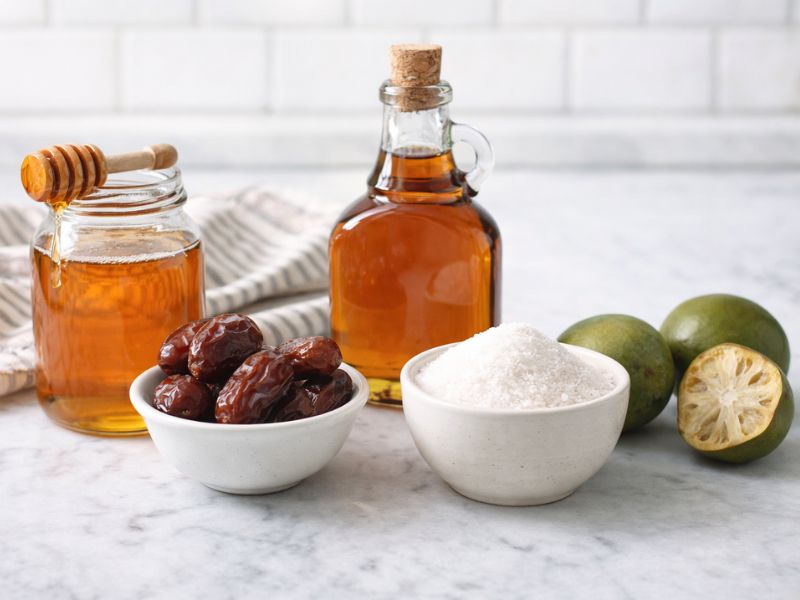
If you are starting to question whether erythritol fits into your lifestyle, you do not need to swing to extremes.
You can simply explore alternatives that feel more aligned.
Some options to consider:
- Monk fruit (without erythritol blends) for a low glycemic option. Our top picks are Durelife and Purisure.
- Raw honey in small amounts for a more whole food approach. Our recommendation: opt for local organic honey sourced from your local farms.
- Maple syrup for minimally processed sweetness. Our top picks Maple Valley, Hidden Springs Maple, Maple Grove Farms, and Whole Foods 365.
- Dates or date syrup for fiber and nutrient density. Our top picks are Just Date Syrup and Date Lady.
- Stevia in its pure form if tolerated well. Our top picks are Viccoky, Enzo, Micro Ingredients, and Pyure.
The goal is not perfection.
It is awareness and intentionality.
The Pure Living Filter
At Pure Living, we are not here to label ingredients as “good” or “bad.”
We look at:
- How often something is consumed
- How it is processed
- How it fits into your daily life
- How your body responds to it
Erythritol is not something to panic about.
But it is also not something to ignore completely, especially if it is showing up in multiple products you are consuming daily.
A helpful way to think about it:
Is this supporting my long-term health, or just helping me replace sugar in the moment?
FAQ: Erythritol and Clean Living
Is erythritol bad for you?
Not inherently. It depends on how much you consume, how often, and how it fits into your overall diet.
Does erythritol cause blood clots?
Some research suggests a potential association between high blood levels of erythritol and clotting risk, but this does not establish direct causation from normal dietary intake.
Does erythritol spike insulin?
For most people, erythritol does not significantly impact insulin or blood sugar levels.
Is erythritol inflammatory?
There is no strong evidence that erythritol is directly inflammatory, but overall dietary patterns matter more than a single ingredient.
Is erythritol safe for gut health?
It is generally better tolerated than other sugar alcohols, but individual responses vary.
A Final Thought
Clean living is not about reacting to every new headline or eliminating every ingredient that raises a question.
It is about building awareness.
Erythritol sits in that middle space. Not something to fear. Not something to rely on blindly.
Just something to understand.
And once you understand it, you can decide how it fits into your version of living well.
Affiliate Disclosure : Some of the links shared in this post are Amazon affiliate links. This means that if you choose to make a purchase through these links, I may earn a small commission at no extra cost to you. I only share products I personally use, trust, and genuinely love. As an Amazon Associate, I earn from qualifying purchases.