A practical guide to choosing clean toothpaste, understanding questionable ingredients, and finding healthier oral care products
When I first started switching over to cleaner, healthier, more sustainable products many years ago after getting severely sick, one of the hardest things for me was figuring out how to replace everyday products.
Soap. Deodorant. Shampoo. Toothpaste.
Back then, trying to figure out what made a product “clean” felt confusing.
What ingredients was I supposed to avoid?
What actually mattered?
What was just marketing?
And honestly, this was 12 or 13 years ago before there were endless wellness creators online breaking everything down for you. At the time, one of the only resources I remember consistently using was Environmental Working Group (EWG). Between that and a lot of late-night research rabbit holes, I slowly started learning how to read labels differently.
Over time, I realized something important.
For me personally, clean living became less about chasing perfection and more about becoming aware of ingredients I genuinely did not feel comfortable using regularly.
That mindset shift made everything feel much less overwhelming.
Instead of trying to memorize every “good” ingredient, I focused more on recognizing the ingredients I wanted to avoid most often.
And honestly, toothpaste is one of those products worth paying attention to because we use it every single day, usually multiple times a day, for years.
So today, I want to make this simpler and practical for you.
Let’s talk about what makes a toothpaste cleaner, what ingredients are worth paying attention to, and some healthier toothpaste brands that are easier to find now than they were years ago.
What Makes a Toothpaste “Non-Toxic”?
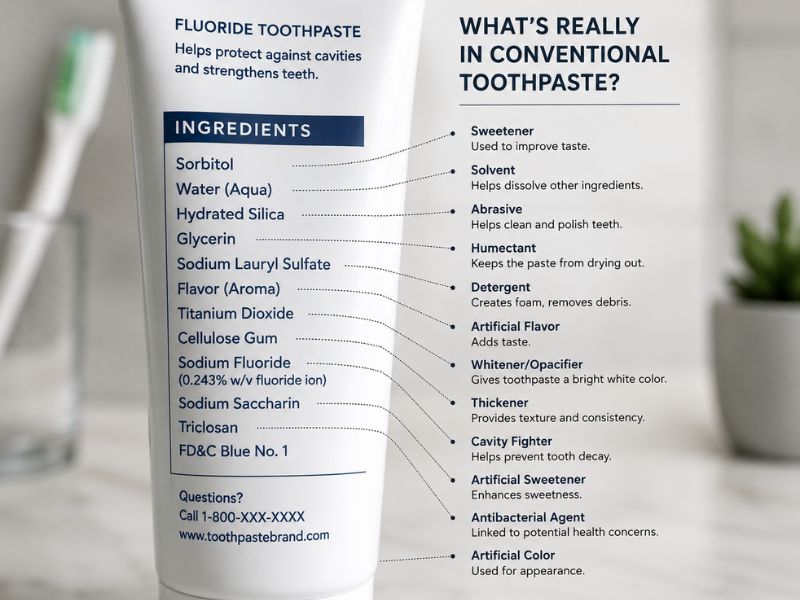
There are ingredients that have been commonly used in oral care products for decades, but there are also growing conversations around irritation, sensitivity, long-term exposure, and how certain ingredients interact with the tissues inside the mouth.
That matters more than most people realize because the mouth is incredibly absorbent.
Research published through the National Institutes of Health has discussed how certain ingredients commonly found in oral care products may contribute to irritation or cytotoxic effects on oral tissues depending on the formulation and concentration.
At the same time, many holistic dental practitioners have also raised concerns around repeated daily exposure to certain toothpaste additives, particularly ingredients linked to irritation, inflammation, or sensitivity in some individuals.
This explains why more people are becoming intentional about ingredient awareness when it comes to products they use every single day.
Here are some of the ingredients many health-conscious consumers choose to pay closer attention to:
Triclosan
Triclosan was previously used in antibacterial toothpaste formulas because of its antimicrobial properties.
Over time, concerns grew around its potential impact on hormone function, bacterial resistance, and skin cancer. While it has become far less common today, many cleaner brands have eliminated it entirely.
Sodium Lauryl Sulfate (SLS)
SLS is one of the most common foaming agents found in toothpaste.
It is what creates that rich foamy feeling many of us grew up associating with “clean.” But according to both research studies and holistic dental discussions, SLS can contribute to irritation in some people, especially those prone to mouth ulcers, dry mouth, or oral sensitivity.
A lot of cleaner toothpaste brands now specifically formulate without SLS because many people simply find gentler formulations more comfortable long term.
Propylene Glycol and Polyethylene Glycol (PEG)
These ingredients are often used to improve texture, appearance, shelf life, and moisture retention.
However, in large quantities, propylene glycol has been linked to damage of the central nervous system, liver and heart.
Some consumers choose to minimize exposure to PEG compounds because they are found in several daily use items such as cosmetics, drugs, and food. Others simply prefer avoiding heavily processed additives where possible.
Artificial Sweeteners and Artificial Flavors
Many conventional toothpastes contain artificial sweeteners and synthetic flavoring agents like saccharin and aspartame to improve taste and make products more palatable.
Over the years, both ingredients have been the subject of ongoing debate and research regarding their potential effects on health, including conversations around gut health, metabolic function, insulin resistance, and cancer. While regulatory agencies continue to consider them approved within established limits, many health-conscious consumers still prefer minimizing artificial additives where possible.
And honestly, for many people, the bigger question becomes: if these ingredients provide no real dental benefit, are they necessary in the first place?
That is one reason many cleaner toothpaste brands now opt for simpler flavoring approaches or naturally derived alternatives instead.
DEA Compounds
DEA-related ingredients can sometimes be used as emulsifiers or foaming agents but avoided by organizations like the American Dental Association due to potential carcinogen and allergen risks.
A 1998 study also linked DEA to deficiencies in the liver.
Consumers should best avoid this ingredient altogether especially in daily use products.
Parabens
Parabens are preservatives used to extend shelf life.
Over the years, parabens became a larger conversation within clean beauty and wellness because of concerns about their possible interaction with hormone pathways leading to breast cancer as well as developmental and reproductive issues.
As a result, many cleaner oral care brands now formulate without them entirely.
Cocamidopropyl Betaine
This coconut-derived surfactant is often marketed as a gentler alternative to harsher foaming agents.
But according to some oral care discussions and sensitivity reports, certain individuals may still experience irritation from it depending on the formulation and concentration.
Titanium Dioxide
Titanium dioxide is frequently added to toothpaste to create that bright white appearance consumers associate with cleanliness.
More recently, some consumers have become cautious about it because of ongoing discussions around nanoparticle exposure and ingestion, especially in products used inside the mouth on a daily basis.
Fluoride
Fluoride is probably one of the most nuanced and debated topics in oral care.
It has long been used to help strengthen enamel and support cavity prevention, which is why many dental professionals continue to support its use in toothpaste and public water systems.
At the same time, some people choose fluoride-free toothpaste because concerns have been raised around excessive fluoride exposure over time. High levels of fluoride exposure have been associated with dental fluorosis, which can cause discoloration or spotting on teeth, particularly during childhood development.
There have also been ongoing discussions and studies exploring fluoride’s potential impact on areas like neurological and endocrine health. For example, a 2006 review by the U.S. National Research Council examined evidence suggesting fluoride may influence endocrine function at certain exposure levels. Later, researchers from Harvard School of Public Health and China Medical University published research reviewing studies that explored possible associations between high fluoride exposure and cognitive development in children.
That said, this is still an evolving area of research, and opinions within the scientific and dental communities continue to vary depending on dosage, overall exposure, and individual health considerations.
Personally, I think there is still much we do not know about the effects of fluoride, so we recommend avoiding it if possible.
Peroxide-Based Whitening Ingredients
A lot of whitening toothpaste formulas rely on peroxide-based ingredients to brighten teeth.
The challenge is that stronger whitening products can sometimes increase tooth sensitivity or gum irritation over time, especially when used too aggressively or too frequently.
Many people eventually find that gentler whitening approaches feel more sustainable and comfortable long-term.
Activated Charcoal
Activated charcoal toothpaste had a huge wellness moment for a while because it was marketed as a more natural whitening option.
But many dental professionals caution against overusing charcoal toothpaste because charcoal can be abrasive. Over time, excessive abrasion may contribute to enamel wear, particularly for people who already have sensitive teeth or brush aggressively.
And honestly, this is such an important reminder that “natural” does not automatically mean gentle.
What To Look For in a Cleaner Toothpaste
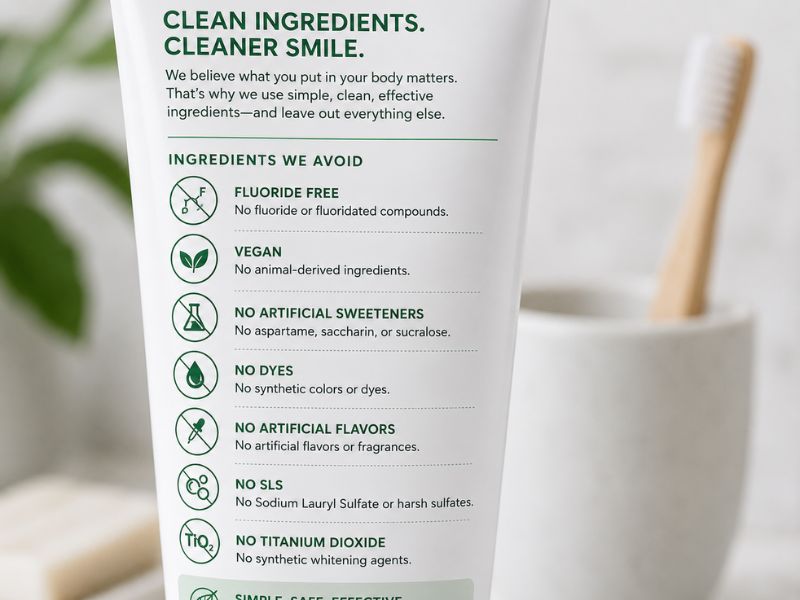
If you are standing in the toothpaste aisle wondering where to even begin, here are a few simple things that can help:
- Look for shorter ingredient lists; simpler formulas always tend to be easier.
- Choose brands that are transparent about their ingredients and clearly communicate what they include, and just as importantly, what they leave out.
- Watch for unnecessary artificial additives, artificial dyes, sweeteners, and heavy synthetic fragrances or flavors.
- Consider your personal needs like sensitivity, gum support, whitening, etc. Clean living is never one-size-fits-all.
Cleaner Toothpaste Brands Worth Exploring
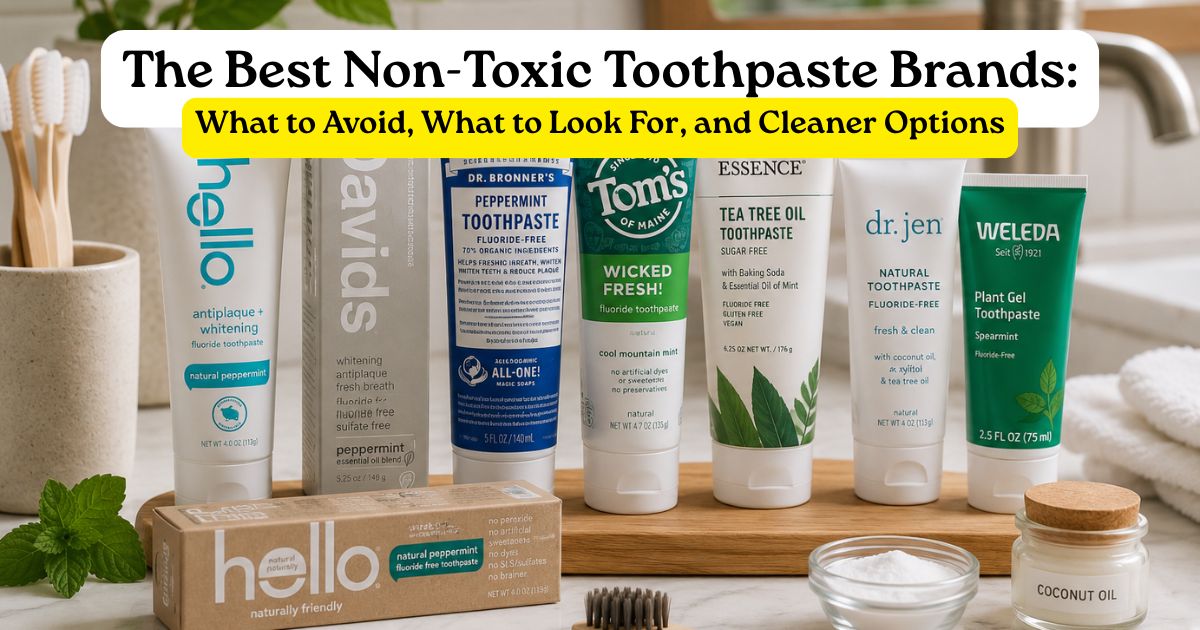
Over the years, I have personally tried, researched, or seen consistently recommended certain brands within the wellness community such as Tom’s of Maine, Davids, Dessert Essence, Dr. Bronner’s, hello, Jason, Dr. Jen, Attitude, Ojook, Modere, With My, Trader Joe’s, Weleda, Happy Tooth, and Burt’s Bees.
Many of them are now available at regular grocery stores, health food stores, or online, which makes clean living so much more accessible than it used to be.
The Best Tool for Finding Cleaner Products
If there is one resource that made a huge difference for me over the years, it was the Think Dirty app.
The app allows you to scan products and learn more about ingredient safety, ratings, and formulations across beauty and personal care products.
Final Thoughts
If you are just starting your clean living journey, toothpaste is one of the easiest places to begin.
Because it is one of those small everyday products we use consistently without thinking much about it.
And over time, those small everyday choices can add up.
What I have learned after all these years is this:
You do not need to know everything to make better choices.
And you definitely do not need to overhaul your entire life in one weekend.
Sometimes awareness starts with one product or one small shift at a time.