A grounded guide to understanding the mental and physical process of healing autoimmune conditions, including phases, setbacks, and what actually supports long-term progress
Hey there,
I want to start a conversation that I wish someone had walked me through earlier in my own journey.
Because when you are dealing with a chronic condition, especially something like an autoimmune disorder, most of the information out there focuses on what to do.
What to eat.
What supplements to take.
What treatments to try.
But very little time is spent on something just as important.
How healing actually works.
Not the quick version.
Not the polished version.
The real version.
Because healing is not just physical. It is just as mental.
And if you do not understand that part first, it becomes very easy to feel like nothing is working, even when your body is actually doing exactly what it needs to do.
Why Healing Chronic Conditions Feels So Unpredictable
If you have ever Googled things like:
- “why is autoimmune healing so slow”
- “why do symptoms come and go with chronic illness”
- “how long does it take to heal autoimmune disease”
You are not alone.
Living with a chronic condition can feel like a constant cycle of progress and setbacks.
One day you feel better.
The next day something flares up again.
It can feel confusing. And at times, discouraging.
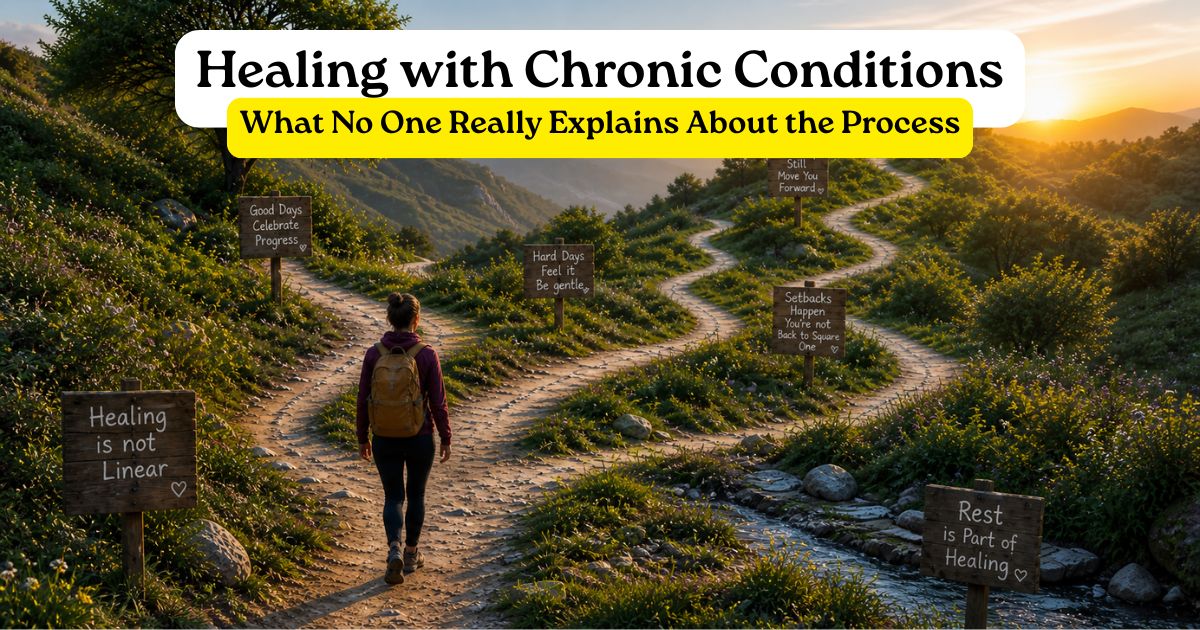
The truth is, healing is not linear.
It is layered. It is cyclical. And sometimes, it feels like you are moving backward before you move forward.
And that does not mean it is not working.
Healing Is Not a Quick Fix. It Is a Process
Let’s set the foundation clearly.
Healing from chronic conditions is not a one-and-done approach.
It is not:
- A single diet change
- One supplement
- One protocol
- One doctor visit
It is a multi-phase process that unfolds over time.
Your body is constantly prioritizing what needs attention first.
Think of it this way
Your body is not trying to overwhelm you.
It is trying to organize healing in a way that is sustainable.
- First, it may reduce inflammation
- Then, it may start improving digestion
- Then, it may begin regulating stress and hormones
Because healing does not happen all at once.
Understanding the Phases of Healing
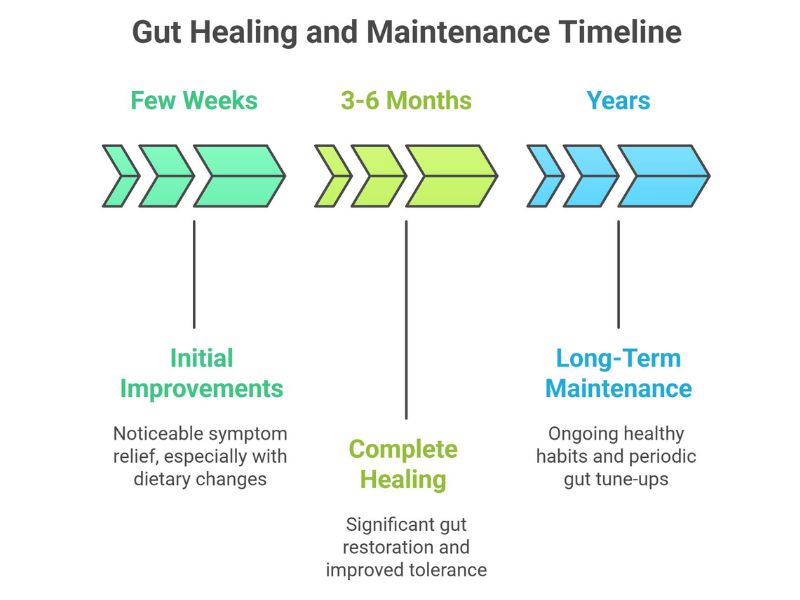
While everyone’s journey looks different, there are common patterns that show up across many people healing from autoimmune conditions.
Phase 1: Stabilizing the Body
This is where your body starts to calm things down.
- Reducing inflammation
- Supporting digestion
- Improving sleep
You may not feel dramatically better yet, but things begin to feel less intense.
Phase 2: Repair and Rebuild
This is where deeper healing starts.
- Gut lining repair
- Nutrient replenishment
- Hormonal balance
This phase often requires patience, because progress can feel slow.
Phase 3: Optimization and Resilience
This is where your body becomes more adaptable.
- Better stress response
- More stable energy
- Fewer flare-ups
Not perfect. But more manageable.
The Layered Nature of Healing
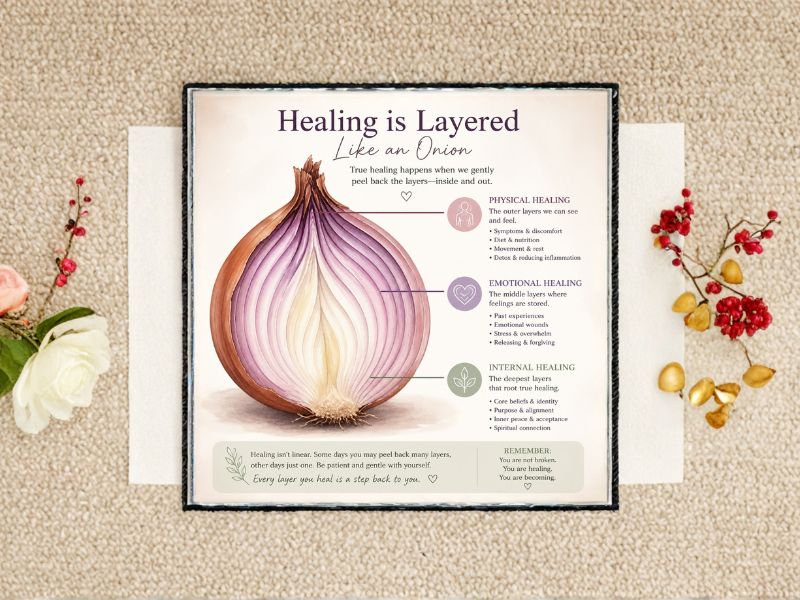
Healing with chronic illness is not just about symptoms.
It is about layers.
Physical. Emotional. Even environmental.
Healing is like peeling back layers
Each layer represents something your body is working through:
- Food sensitivities
- Gut imbalance
- Chronic stress
- Emotional patterns
And your body will not address everything at once.
It works step by step.
Because sometimes, what feels like a setback is actually your body working through a deeper layer.
Healing Is Not the Same for Everyone
This is one of the most important things to understand.
What works for one person may not work the same way for you.
And the order of healing can look completely different.
For example:
- Someone may feel immediate improvement from removing gluten
- Someone else may not notice a difference until gut health improves first
Both are valid.
Why?
Because each of us has:
- A different genetic makeup
- A different history of exposure and stress
- A different starting point
So when people search:
- “best diet for autoimmune disease”
- “what heals chronic illness fastest”
The honest answer is:
There is no universal formula.
The Role of Trial and Error in Healing
This is the part that can feel frustrating.
But it is also where learning happens.
Healing often involves:
- Trying something new
- Observing how your body responds
- Adjusting accordingly
There will be moments where something does not work.
That does not mean you failed.
It means you gathered information.
And that information helps guide your next step.
The Mental Side of Healing
This is the piece that often gets overlooked.
But it is one of the most important.
Because when you are constantly:
- Questioning every symptom
- Switching protocols too quickly
- Losing trust in your body
It creates a cycle that can slow progress.
Healing requires a certain mindset
Not perfection.
But:
- Patience
- Consistency
- Willingness to stay the course
Because healing is not just about what you do.
It is about how you approach it.
Learning to Trust Your Body Again

I know this can be the hardest part.
Because when your body feels like it is working against you, trust does not come easily.
But here is something worth considering.
Your body is not confused.
It is responding.
Every symptom, every signal, is communication.
Instead of fighting your body, try observing it
- What makes you feel better?
- What consistently makes you feel worse?
- What patterns keep repeating?
Over time, this builds awareness.
And awareness builds trust.
Why Sticking to a Protocol Matters
This is one of the biggest shifts that changed things for me.
Starting something is easy.
Sticking with it long enough to see results is where most people struggle.
Why consistency matters
Your body needs time to respond.
Cell regeneration alone takes time.
- The human body replaces roughly 1% of its cells daily, which equates to about 330 billion cells
- Over 80 to 100 days, a significant portion of cells are renewed, about 30 trillion cells, which is the equivalent of a new you
What that means in practice:
If you switch approaches too quickly, your body never fully adapts for you to experience the effectiveness of a protocol or treatment.
This is why people often search:
- “how long to try a healing protocol”
- “when to stop a diet or supplement”
And the answer is often:
Give it time.
Not forever. But long enough to observe real patterns.
Cost, Lifestyle, and Tradeoffs
Healing with chronic conditions often requires changes that go beyond just what you eat.
Lifestyle shifts may include
- Cooking more at home
- Prioritizing sleep
- Reducing exposure to certain products
- Investing in higher quality food
There can be:
- Financial costs
- Time commitments
- Social adjustments
But there can also be:
- More stability in how you feel
- Better energy
- Fewer unpredictable flare-ups
It is not about doing everything at once.
It is about making changes that are realistic and sustainable for you.
The Pure Living Filter
We believe:
- Healing should feel approachable
- Not every change needs to happen at once
- Your body deserves time to respond
We are not here to tell you there is one right way.
We are here to introduce you to options so you can make decisions that actually work for you.
Because healing is not about doing everything.
It is about doing what matters, consistently.
A Final Thought
Healing is not about doing everything perfectly.
It is about learning how your body works and responding with care instead of urgency.
There will be moments where it feels slow.
Moments where it feels unclear.
But that does not mean nothing is happening.
Sometimes, it just means your body is working quietly in the background.
And over time, those small shifts begin to add up.