

Understanding the difference between food intolerance and food allergies, how symptoms show up, and what it means for inflammation, digestion, and long-term wellness
Have you ever eaten something and just felt…off?
Not immediately. Not dramatically. Just enough to notice.
Maybe it was bloating that lingered longer than usual. A headache that crept in later that afternoon. Fatigue that didn’t quite make sense.
And then there are the moments that feel completely different. A sudden reaction. A rash. Swelling. A body that goes into full alert mode within minutes.
Both experiences are real. But they are not the same.
And understanding the difference between food sensitivity vs food allergy is one of those small shifts in awareness that can change how you approach your health entirely.
Let’s walk through it in a way that actually makes sense.
Food Sensitivity vs Food Allergy: What’s the Difference?
At a high level, both involve your body reacting to food. But the why and the how are very different.
- Food sensitivity (also called food intolerance) is primarily a digestive issue
- Food allergy is an immune system response
That distinction matters more than most people realize.
In simple terms
- A food allergy is your body sounding an alarm
- A food sensitivity is your body struggling to process something
Both can impact how you feel. But one is immediate and potentially life-threatening, while the other is often subtle, delayed, and easy to overlook
Quick Comparison: Food Sensitivity vs Food Allergy
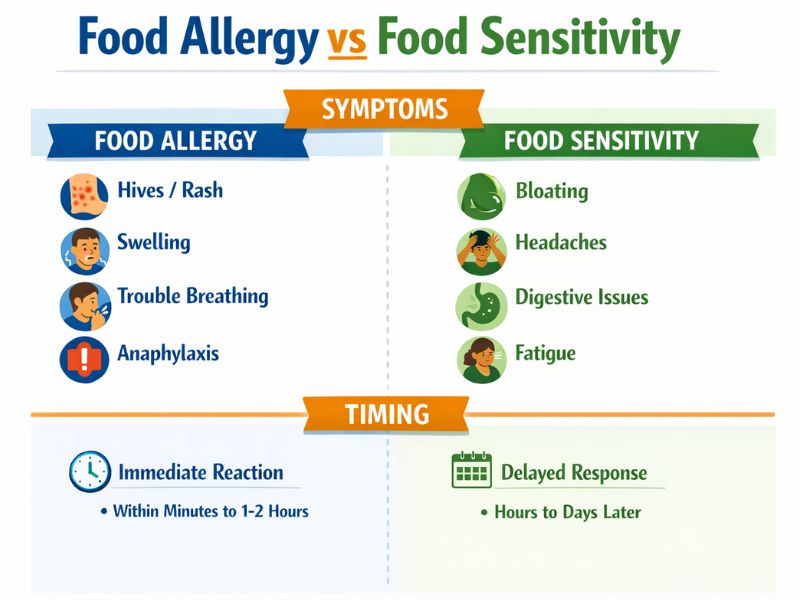
| Feature | Food Sensitivity (Food Intolerance) | Food Allergy |
| Body System Involved | Digestive system | Immune system |
| Reaction Type | Difficulty digesting certain foods | Immune reaction to food proteins |
| Symptom Timing | Delayed, hours to days later | Immediate, within minutes |
| Common Symptoms | Bloating, gas, fatigue, headaches, joint pain, skin issues | Hives, swelling, trouble breathing, anaphylaxis |
| Severity | Usually mild to moderate, but persistent | Can be severe or life-threatening |
| Testing | Elimination diet, food diary, MRT Leap Testing, IgG testing | Skin prick test, IgE blood test, oral food challenge |
| Long-Term Impact | Can contribute to chronic inflammation | Requires strict avoidance due to risk |
Why Timing Matters More Than You Think
One of the biggest reasons people struggle to identify food sensitivity symptoms is timing.
If you eat something and feel unwell right away, the connection is obvious.
But what about when symptoms show up later?
- You eat something at lunch
- You feel bloated at dinner
- You wake up with a headache the next day
Would you connect those dots?
Most people don’t.
And that is why searches like “why do I feel bloated hours after eating” or “foods that cause delayed reactions” are so common.
Food sensitivities are not always loud. But they are often consistent.
Common Symptoms of Food Sensitivity
Food sensitivities can show up in ways that feel disconnected from food entirely.
Some of the most common include:
- Bloating and gas
- Abdominal discomfort
- Diarrhea or irregular digestion
- Headaches or migraines
- Fatigue or brain fog
- Joint pain
- Skin issues like eczema or acne
Nothing here screams “emergency.”
But over time, these symptoms can quietly affect your quality of life.
What Happens in a Food Allergy
A food allergy reaction is very different.
It involves your immune system identifying a food protein as a threat and responding quickly.
Symptoms may include:
- Swelling of the lips, face, or throat
- Hives or skin rash
- Difficulty breathing
- Rapid onset nausea or vomiting
- In severe cases, anaphylaxis
This is why people often search “how to tell if you have a food allergy” or “food allergy symptoms immediate reaction.”
Because when it happens, it is hard to ignore.
Why Food Sensitivities Are Often Overlooked
Food allergies get attention because they are urgent.
Food sensitivities get missed because they are subtle.
And yet, they are often the ones quietly contributing to:
- Chronic inflammation
- Digestive imbalance
- Ongoing fatigue
- Hormonal disruptions
This is where conversations around gut health and food sensitivities start to matter more.
The Gut Connection: Why Sensitivities Matter More Over Time
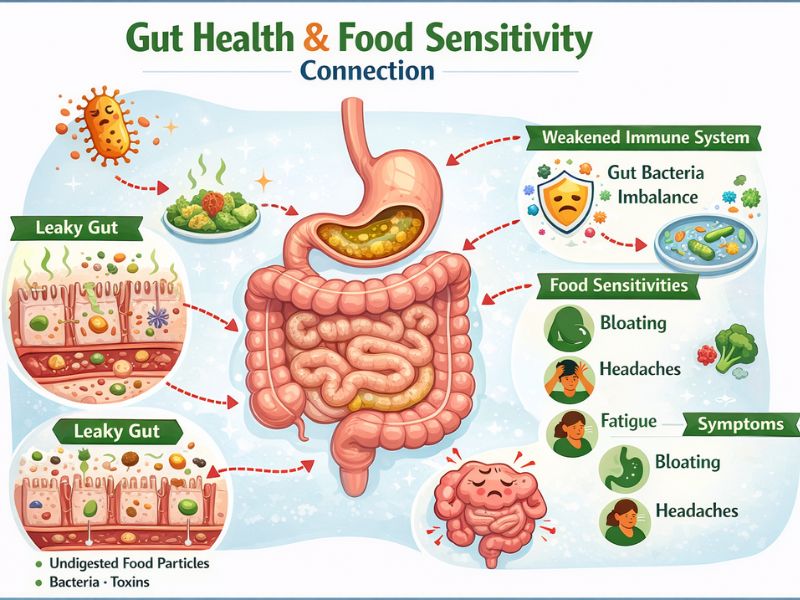
When your gut is functioning well, it acts as a strong barrier.
It digests, absorbs, and protects.
But when gut health is compromised, things shift.
You may become more sensitive to foods that never bothered you before.
This is why many people searching “why am I suddenly sensitive to foods” or “leaky gut food intolerance symptoms” are actually dealing with a deeper imbalance.
What can contribute to this?
- Chronic stress
- Poor diet quality
- Overuse of antibiotics
- Environmental toxins
- Existing inflammation
When the gut is under strain, the body becomes more reactive.
Food Sensitivities and Autoimmune Conditions
This is where things become more personal for a lot of people.
In autoimmune conditions, the body is already in a heightened state of inflammation.
Certain foods can amplify that response.
Not always dramatically. But enough to matter.
For example:
- Joint pain may worsen after certain meals
- Fatigue may feel heavier on certain days
- Digestive discomfort becomes more frequent
And this is often where people begin searching “best diet for autoimmune disease” or “foods that trigger inflammation in the body.”
For me, this was a turning point.
I had to pay attention. Not just to what I was eating, but how my body responded after.
That awareness changed everything.
How to Identify Your Trigger Foods
This is the part most people want a shortcut for.
But the truth is, there isn’t one.
1. Elimination Diet
One of the most effective ways to identify food sensitivities is to remove common trigger foods and slowly reintroduce them.
Common triggers include:
- Gluten
- Dairy
- Sugar
- Caffeine
- Soy
- Corn
- Processed Foods
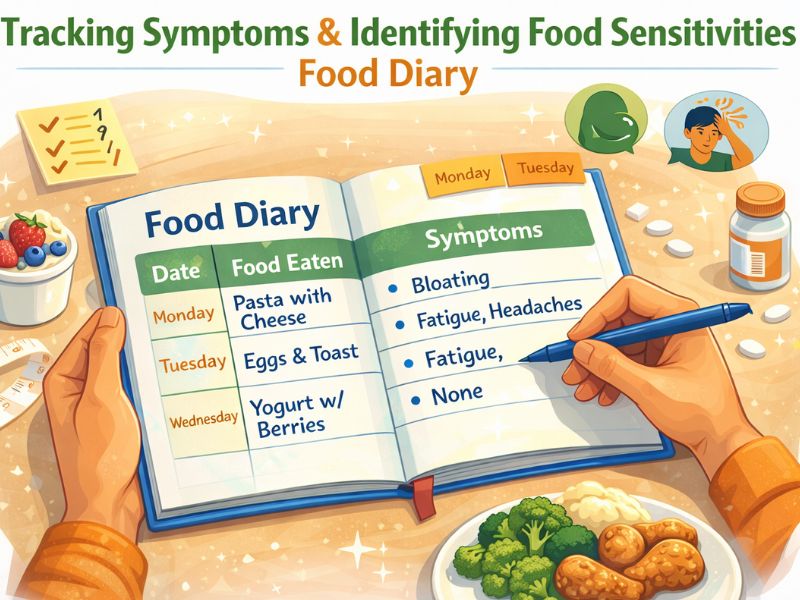
2. Food Diary
Tracking what you eat and how you feel can reveal patterns over time.
It sounds simple. But it works.
3. Functional Testing
Some people explore MRT Leap or IgG testing or other functional lab work.
These can provide insight. (I have personally tried both and MRT was a lot more effective in managing my symptoms then IgG.)
The Reality No One Wants to Hear
Identifying your trigger foods is one thing.
Actually adjusting your lifestyle around them is another.
And yes, it can feel inconvenient.
- It may change how you grocery shop
- It may affect where you eat
- It may require reading labels more closely
There is a cost to that.
Not just financially, but socially and emotionally too.
But there is also a return.
More energy. Less discomfort. A body that feels more stable.
And over time, that tradeoff starts to feel worth it.
Cost and Lifestyle Tradeoffs
Living with food sensitivities often leads people to seek out cleaner, less processed foods.
That can mean:
- Higher grocery bills
- More time spent cooking
- Fewer convenient options
But it can also mean:
- Better ingredient awareness
- Reduced exposure to additives
- A more intentional relationship with food
The Pure Living Filter
At Pure Living, we look at this through a very grounded lens.
Not everything needs to be eliminated overnight.
Not every symptom needs to be overanalyzed.
But patterns matter.
If your body is consistently responding to certain foods, that is information worth paying attention to.
We are not here to label foods as “good” or “bad.”
We are here to help you understand what works for your body.
Because what feels supportive for one person may not feel the same for another.
And that nuance matters.